Report: June 3 – June 10, 2026
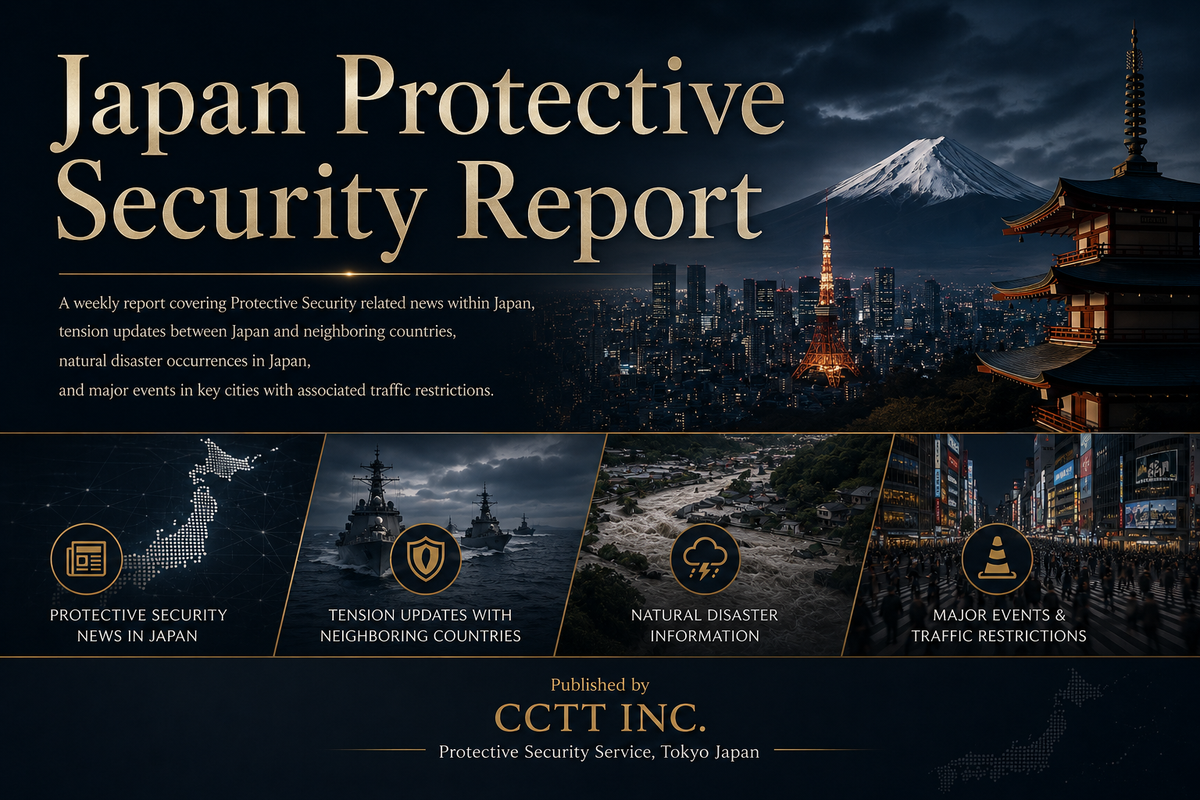
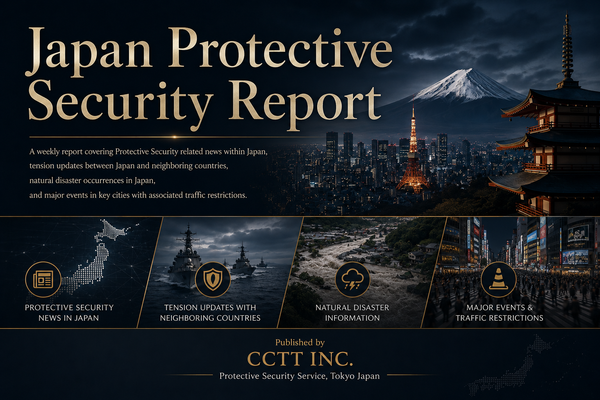
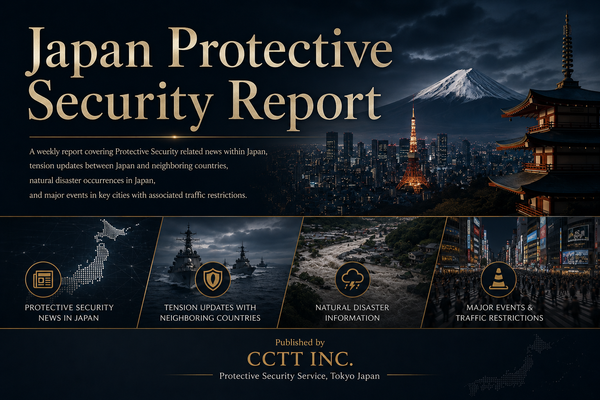
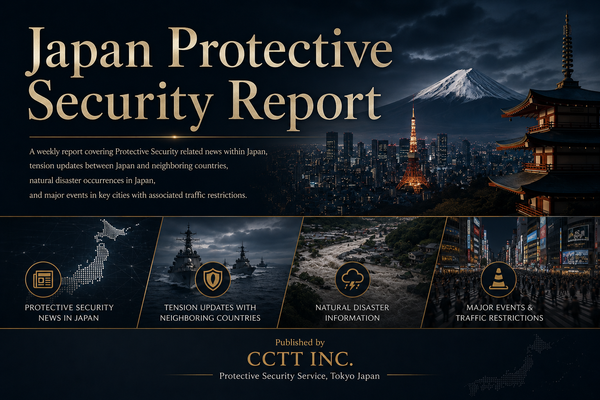
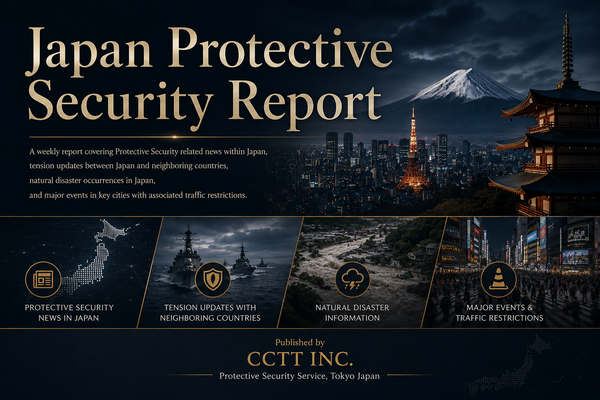
Japan Protective Security Report (Weekly)
Report: June 3 – June 10, 2026
Published: Wednesday, June 10, 2026 (JST)
A weekly English-language OSINT briefing for executive protection professionals, bodyguards, and corporate security managers operating in or visiting Japan.
🔒 Section 1: Weekly Security News Summary
NPA Orders Nationwide Warnings to Students About “Shady Part-Time Jobs” Linked to Anonymous Criminal Groups
Japan’s National Police Agency (NPA) instructed police nationwide to strengthen outreach to junior high and high school students ahead of summer vacation, warning about illegal “part-time job” recruitment associated with anonymous, flexible criminal groups (often recruited via social media). The NPA also published educational materials emphasizing practical risk points (e.g., accepting “job” offers even from acquaintances, and the consequences of selling bank accounts). Authorities signaled they will prioritize protecting people who come forward after being coerced into these schemes.
Source: Mainichi Shimbun (English)[42]
💡Tips for Professionals:
EP/CP teams should update Japan briefings for visiting executives and families: “yami-baito” recruitment can target foreigners and locals alike via messaging apps, and can quickly shift into coercion, blackmail, or forced logistics roles. For corporate security managers, reinforce policy controls around bank accounts, SIMs, and “cash mule” behaviors—especially for young staff, interns, and contractors. If protecting families with teenagers in Japan, brief guardians on common recruitment approaches and establish a “call us first” protocol if a minor receives suspicious offers or threats.
Home-Invasion Robbery in Western Tokyo (Tachikawa) Highlights “Tokuryu” Modus Operandi and Pre-Attack Recon
Tokyo Metropolitan Police arrested a suspect in connection with a December home-invasion burglary/robbery in Tachikawa involving a group intrusion and theft of cash and valuables. Investigators described the scheme as linked to “tokuryu” (loosely structured, anonymity-focused criminal groups), and the case details indicated operational planning: use of secure messaging, tasking for tools, and reconnaissance (including residence layout information). The suspect reportedly turned to “yami-baito” style work due to large personal debts—illustrating how debt pressure can feed recruitment pipelines.
Source: The Japan Times[3]
💡Tips for Professionals:
For residential protection in Greater Tokyo, treat “tokuryu” as capable of basic intelligence prep: assume adversaries may have building layouts, schedules, and entry tool plans. Tighten “pre-attack indicator” monitoring (unknown loiterers, repeated delivery/utility “pretexts,” unusual questions to staff) and ensure CCTV retention is long enough to review days/weeks of patterning. For hotels/serviced apartments, brief principals that “target selection” may include visible cash/asset behaviors—reduce predictability around ATM use, luxury shopping drop-offs, and repeated routes from lobby to rooms.
Organized-Crime-Linked Cash Theft Case Raises Risk Around High-Value Cash Movements (Ueno) and Secondary Targeting
Authorities arrested additional suspects, including a senior yakuza member, over the alleged theft of three suitcases containing a very large amount of cash taken from a street in Tokyo’s Ueno area earlier this year. Police indicated they are examining links between this theft and other incidents, including an attempted robbery at a Haneda Airport parking facility. The case underscores that high-value cash movement (even if associated with informal trade) can attract organized facilitation, recruitment, and follow-on targeting.
Source: Mainichi Shimbun (English)[44]
💡Tips for Professionals:
If supporting clients who may move large cash amounts (legal or illicit), treat the “hand-off location” as a predictable point of vulnerability: apply counter-surveillance, vary routes, and avoid public curbside transactions near stations/shopping streets. For airport movements, consider parking and curbside zones as potential ambush points—pre-plan controlled pick-up areas and limit time stationary with doors open. Corporate security managers should remind traveling executives: Japan is generally safe, but high-value-carry behaviors (luxury goods, cash, visible brand bags) can still create targeted opportunity.
Interpol Red Notice Issued for Suspected Organizer of Tochigi Robbery-Murder: Cross-Border Flight Risk and Recruitment via Anonymous Apps
Japanese authorities obtained an Interpol “Red Notice” for a suspect believed to have organized a robbery that resulted in a fatality in Tochigi Prefecture last month; reporting indicated the suspect may be abroad (Southeast Asia). The case highlights a recurring pattern: organizers recruiting executors through high-anonymity messaging, offering large payouts, and directing roles remotely. It is also a reminder that domestic violent-crime organizers can rapidly become cross-border fugitives, complicating investigative timelines.
Source: Nippon.com (Jiji Press)[50]
💡Tips for Professionals:
For EP teams, update threat education: “recruitment and tasking” in Japan increasingly uses anonymous messaging, enabling rapid assembly of ad hoc crews—including minors. For corporate security managers, brief Japan-based staff to report suspicious “easy money” offers immediately; early intervention is often safer than trying to “exit quietly” once coerced. If operating in Tochigi and adjacent prefectures, maintain awareness that high-profile investigations can drive opportunistic “copycat” behavior and police activity (checkpoints, patrol surges) near incident areas.
Fatal Stabbing in Hokkaido (Chitose) with Injuries to Responding Officer Highlights Domestic-Relationship Violence Risk
Police detained a suspect following a stabbing in Chitose, Hokkaido, in which a young woman later died; reports indicated the suspect was believed to have known the victim. During the incident response, an officer was injured, and another person also sustained injuries. While Japan’s overall violent crime rate remains low compared with many countries, the case reinforces that domestic or acquaintance-related violence remains a key personal safety risk category, including for foreign residents and travelers.
Source: Mainichi Shimbun (English)[46]
💡Tips for Professionals:
For protective advance work, don’t over-focus on “random street crime” at the expense of interpersonal risk: include relationship, harassment, and stalking screening in client intake and itinerary planning. If protecting foreign nationals (or principals in mixed-nationality relationships), ensure access to local support resources and a rapid relocation plan if threats escalate. In residential neighborhoods near stations, consider “arrival and departure windows” as potential confrontation moments—use discreet, time-variable pick-ups and avoid predictable solo walks.
Zoo Intrusion Incident Near Tokyo (Chiba) Shows Ongoing Risk of Unauthorized Entry and Crowd-Driven Disruption at Family Venues
Two U.S. nationals were fined after an incident in which they entered a zoo animal enclosure area, prompting law enforcement response and operational disruption. While not a classic protective-security incident, it is relevant for family protection and public-venue planning: curiosity-driven “stunts” can trigger sudden security tightening, temporary closures, and crowd surges around focal points (photo/video gathering).
Source: Kyodo News[40]
💡Tips for Professionals:
When protecting families or VIPs at attractions (zoos, theme parks, aquariums), anticipate sudden “incident-driven” crowd clustering and the possibility of partial area lockdowns. Pre-identify low-congestion egress routes and alternate meeting points outside the venue perimeter. For principals who are recognizable or traveling with children, consider off-peak entry times and maintain a buffer itinerary so a venue disruption doesn’t force rushed movement.
🌏 Section 2: Japan–Foreign Nations Tension Monitor
1. China – Tension Level: Elevated
Regional friction increased around waters east of Taiwan after Japan and the Philippines moved toward talks on maritime boundary delimitation; reporting noted China responded by sending coast guard ships off Taiwan’s east coast, drawing pushback from Taipei. Although not a Japan–China bilateral incident alone, it contributes to an elevated regional security environment that can affect posture at ports, aviation/airport messaging, and protective planning for high-visibility foreign delegations.
Source: The Japan Times[13]
💡Tips for Professionals:
For EP teams supporting Chinese-, Taiwanese-, Philippine-, or Japan-government-adjacent stakeholders, treat public appearances and transport nodes as higher-sensitivity during periods of maritime friction (higher chance of protests, media convergence, and police presence). Corporate security should review crisis communications triggers for Taiwan-related escalation, including traveler messaging and itinerary flexibility for Okinawa/Kyushu routes.
2. Russia – Tension Level: Moderate
Japanese reporting described concerns and debate around Japan’s outreach posture toward Russia, indicating ongoing sensitivity as Tokyo balances diplomatic signaling and alliance considerations. While not necessarily resulting in immediate street-level threat, Russia-related policy shifts can correlate with heightened attention near government districts, foreign missions, and events involving sanctions, energy, or maritime topics.
Source: Mainichi Shimbun (English)[17]
💡Tips for Professionals:
For protective teams in Tokyo, monitor for demonstrations or small gatherings near government buildings when Russia-related policy statements are anticipated. Corporate security managers with Russia-linked business exposure should validate sanctions-compliance messaging and anticipate reputational risk or activist attention at public events.
🌋 Section 3: Natural Disaster Report
Volcanic Activity: Sakurajima (Kagoshima) – Alert Level 3 (Entry Restricted); Eruptive Activity Observed June 7–8
Japan Meteorological Agency (JMA) reporting indicated Sakurajima remained under a crater-area warning with eruption alert level 3 (entry restrictions). JMA noted eruptive activity beginning early June 7 and continuing intermittently into the night, with an observed plume reaching about 1,300 meters above the crater rim and drifting west; the agency continued to warn of large volcanic rocks and small pyroclastic flows within the restricted zone, plus ash-related hazards and potential mudflows if heavy rain follows.
Source: Japan Meteorological Agency (Sakurajima Activity Update)[21]
Tsunami Advisory Issued for Wide Pacific Coastline After Philippines Earthquake (Advisory Lifted Same Day)
Following a large earthquake off the southern Philippines on June 8, Japan’s weather authorities issued a tsunami advisory covering broad stretches of Japan’s Pacific coastline (from Ibaraki down to Okinawa, per reporting). Kyodo reported minor tsunami observations in Okinawa (and also noted an observation at Chichijima in the Ogasawara Islands) after the advisory was issued, illustrating how regional seismic events can generate sudden coastal movement restrictions and ferry cancellations.
Source: Kyodo News[60]
💡Tips for Professionals — Natural Disaster / Operational Continuity:
For coastal itineraries (especially Okinawa, Shizuoka, and the broader Pacific-facing corridor), ensure your team can rapidly switch from “normal movement” to “coastal avoidance” with pre-briefed rally points on higher ground. In Kagoshima operations, plan for ashfall as a practical mobility hazard: reduced traction, impaired visibility, HVAC intake issues for vehicles, and increased eye/respiratory irritation—carry masks/eye protection and schedule extra vehicle maintenance time. For business continuity, maintain redundant comms and an English/Japanese alert-monitoring stack (JMA/NHK/municipal alerts) so movement decisions aren’t delayed by language or platform issues.
📅 Section 4: Upcoming Major Events & Traffic Restrictions
Tokyo
- Tokyo Big Sight — Ongoing Exhibition Schedule (Venue Crowding / Odaiba Area Congestion) – Next 7 days (check daily listings)
- Location: Tokyo Big Sight (Koto City / Odaiba area)
- Traffic: Large-scale conventions can drive spikes in taxi demand, bus queues, and localized road congestion around Ariake/Odaiba; plan alternate pick-up points away from main entrances during peak entry/exit windows.
- Source: Tokyo Big Sight (Visitor Information / Event Listings)
Tips for Professionals: Build 20–40 minutes of buffer time for Odaiba-area vehicle movements during major exhibition changeovers, and pre-designate secondary pick-up/drop-off points in case of crowding at main doors. For VIP movements, consider using rail options as a fallback if vehicle access is constrained (while accounting for station crowd density).
Osaka
- Aizen Festival (Aizen Matsuri) – Late June / Early July Continuation Events – June 10–17 (monitor for local updates within the broader festival period)
- Location: Tennōji area (around Aizen-dō / Shōman-in Temple; broader Tennōji ward foot traffic)
- Traffic: Expect localized pedestrian density and intermittent congestion in the Tennōji area during evening stall hours; vehicle approach near temple-adjacent streets may be slow.
- Source: MEANDER Group (Osaka Event Update)[33]
Tips for Professionals: In dense pedestrian festival areas, prioritize foot-route reconnaissance and identify “quiet corridors” one block off the main flow for discreet movement. For drivers, avoid last-minute curbside stops near festival perimeters; use pre-briefed turnarounds and protected loading zones where possible.
Nagoya / Central Japan (Expressway Planning Note)
- NEXCO Central (General Advisory to Check Weather/Traffic Before Travel) – Next 7 days (operational planning reference)
- Location: Central Japan expressway network
- Traffic: Weather-driven restrictions can be implemented quickly during heavy rain; verify real-time road status before departure and plan alternates.
- Source: NEXCO Central[30]
Tips for Professionals: For movements relying on expressways, ensure drivers have a “no-network” fallback plan (offline maps, alternate surface routes) and maintain flexibility for last-minute reroutes during severe weather.
Japan Protective Security Report (Weekly)
This report is based on open-source intelligence (OSINT) gathered from publicly available, high-credibility sources. It does not constitute legal advice, and CCTT INC. makes no warranty regarding completeness or accuracy. Operational decisions should always incorporate real-time local intelligence.
CCTT INC. – Protective Security Service, Tokyo Japan
VIP/Executive Protection | Celebrity Protection | Vehicle and Driver Arrangement | Airport Service Arrangement | Security Consulting | Security Management | Security Education/Training, etc.